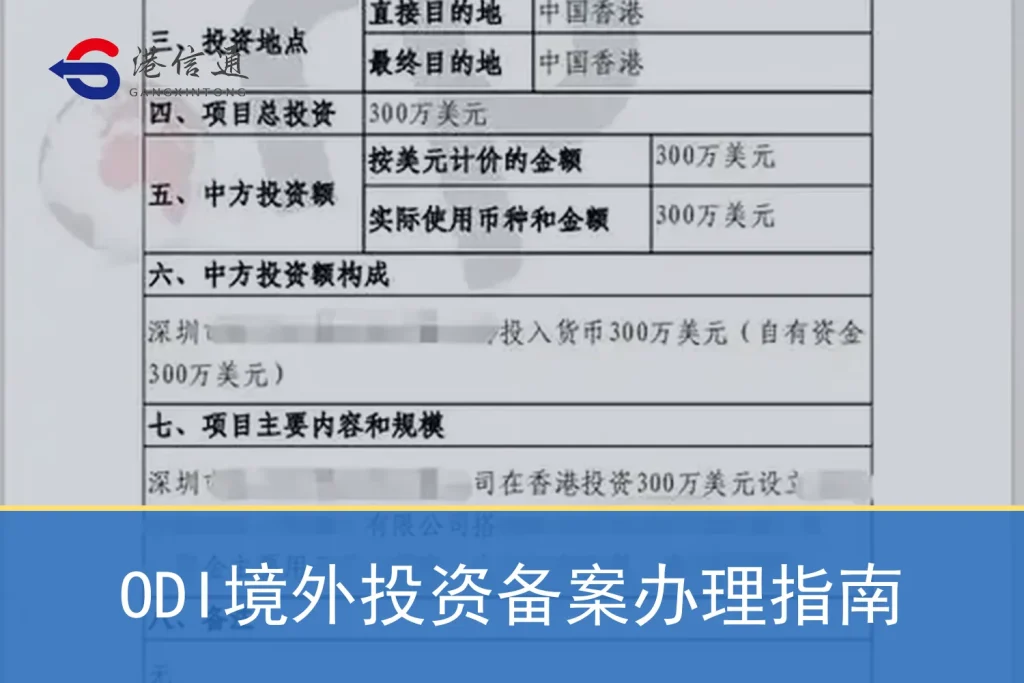
Recently, many mainland private equity institutions have actively deployed overseas business,Chongyang Investment、Fushan Investment、China Shepherd Fund、Wangzheng Capital and others have set up subsidiaries or issued fund products in Hong Kong.。affected by this,Hong Kong financial license application:Application conditions、Process and Supervision PointsThere has been a significant increase in the number of applicants,There was even a tight queue。Hong Kong No. 9 License Application:Conditional requirements and overseas layout practicesWhat's the appeal? Which private placements have been successfully approved? What are the options for overseas channels? The following is a description of these issues。

What is Hong Kong License No. 9?
Hong Kong implements financial license management system,Financial institutions can conduct stock trading at the same time、financial derivatives、Trading in foreign exchange and gold,However, the corresponding license must be obtained。There are 10 license types in total,Divide by number:1License plate for securities trading,2No. for futures contract trading,3Number plate for leveraged foreign exchange trading,4License to provide advice on securities,5No. provides advice on futures contracts,6Provide advice on institutional financing,7Number plate provides automated trading services,8License plate provides securities margin financing,9License plate provides asset management,10Providing credit rating services。
in,Hong Kong license No. 9 and 149:Application conditions、Transfer Path and Compliance ProcessingyesHong Kong license number 9:Application conditions、Securities Regulatory Commission Assessment Criteria and Processing FeesType 9 regulated business qualification license issued under the Securities and Futures Ordinance,i.e. asset management license。Licensed institutions are equivalent to obtaining a "pass" in the international capital market,Not only can you directly participate in overseas investment,,Can also raise funds from overseas investors。
A private equity institution in the Mainland that has been approved for No. 9 license stated that,This license can carry out a wide range of business,Including overseas asset allocation、Investment consulting, etc.,Investment methods and tools are more abundant,At the same time, it can attract overseas funds to invest in the domestic market.。
Hong Kong No. 9 license application requirements
Liu Yu, a researcher at Geshang Financial Management, pointed out,9The license focuses on asset management business,Most consistent with the private equity operating model,The number of applicants has continued to rise since last year,Year 6、7Monthly update peaks in applications,Growth rate exploded for a time。at the same time,The pace of approval by the Hong Kong Securities Regulatory Commission has tightened,Audit standards tightened,Application difficulty gradually increases。
According to the regulations of the Securities and Futures Commission of Hong Kong,To apply for a No. 9 license, you need to meet the following conditions::
- There must be 2 Hong Kong licensed responsible persons,And each responsible person must have 3 to 5 consecutive years of publicly disclosed capital market performance records.,and must pass a series of rigorous examinations and qualification reviews;
- The applicant company must have an actual office address in Hong Kong;
- Equipped with an experienced management team to assist in operating the company。
overall,Applying for the No. 9 license requires higher comprehensive strength of the organization.。
Well-known private equity firm in the industry that already holds No. 9 license
According to statistics,Well-known private equity institutions that have obtained Hong Kong license No. 9 include Fushan Investment、Jingtai Lifeng Assets、Bai Fang Assets、ivy assets、Tianma Assets、Infore Capital、Qiju Assets、Yifan Assets、value gravity etc.,Approval times vary。Among the larger institutions in the industry,Chongyang Investment、Jinglin Assets、Danshui spring investment、Invest with a pure heart、Zhuque Investment、Oriental Harbor、Yitiange Investment and Wang Yawei’s top trump assets, etc.,have also held the license。
Private equity overseas channels and comparison of advantages and disadvantages
At present, the available channels for mainland private equity to go overseas mainly include the following five channels:,Each has its own pros and cons:
- Shanghai-Hong Kong Stock Connect/Shenzhen-Hong Kong Stock Connect:Configurable Hong Kong market,But limited to the scope of Hong Kong Stock Connect targets,Participating markets and varieties are limited;
- QII:Borrow QDII quota from financial institutions such as public offerings,Passage fee required,And as QDII quotas tighten,Channel fees continue to rise;
- Set up a company in Hong Kong and obtain license No. 9:Products can be issued directly,However, the licensing process requires more manpower and material resources.,Time cost is higher;
- Issuance through overseas private equity managers,Participate as an investment advisor:A certain amount of channel fee is required,It is one of the more mainstream models currently;
- QDLP:Go overseas through the QDLP quota of overseas asset management companies,Generally applicable to strategies that directly invest in the products of corresponding overseas asset management companies。
QDLP is mainly for overseas hedge funds,Hedge fund products that can directly raise funds domestically and invest in overseas asset management institutions。Domestic funds cannot directly invest in hedge funds under the ordinary QDII mechanism.,The QDLP quota allows domestic RMB funds to be raised and invested in overseas hedge fund products.。but,This channel serves more investors’ overseas allocation needs.,Relatively limited direct effect on private equity managers。
Due to the high cost of applying for the No. 9 license by yourself,Some private placements choose to use licensed managers as channels,Issuing products as an investment advisor。According to Liu Yu,This model has become one of the mainstream practices。For example,OP Asset Management obtained license No. 9 as early as 2003,Entered the mainland market since the fourth quarter of last year,Provide comprehensive offshore fund services to private equity institutions。OP Asset Management recently cooperated with Shenzhen Daopu Capital,Daopu Capital plans to launch its first Chinese quantitative long-short strategy offshore fund in the fourth quarter of 2016。2025September 1,OP Financial Group and OP Asset Management announced that they will invest HK$2 billion in an emerging fund on the OP Asset Management fund platform.。
For private equity companies that have obtained the No. 9 license,Private equity funds can generally be established in Cayman,Settled in Hong Kong and accepted supervision by the Securities and Futures Commission of Hong Kong,Then trade through a brokerage firm,Customers can subscribe through Hong Kong securities firms。
Reasons why private equity companies are eager to apply for the No. 9 license
Currently, many institutions are actively applying for the No. 9 license,The main driving factors focus on the following aspects:
- RMB depreciation expectations:Investors’ demand for overseas asset allocation rises,Want to hedge exchange rate risks through overseas investment;
- Domestic asset shortage:Domestic capital costs are high,High-quality assets are relatively scarce,Prompt managers to look for opportunities overseas;
- Domestic regulations are tightening:Domestic investment space has narrowed,Some private equity firms consider exploring international markets to diversify business risks;
- Improved overseas investment systems and tools:Rich investment varieties,Policy capacity is larger,Especially for quantitative private equity,Overseas markets can effectively break through the bottleneck of limited domestic tools。
Chairman of a private equity firm in Shenzhen added,Currently, customers seeking overseas investment are mainly divided into two categories::First, domestic funds hope to use private equity to invest overseas to avoid depreciation.;Second, the customer already has assets overseas,Expect to entrust professional private equity to take care of it。
Liu Yu further pointed out,Since last year, many quantitative private equity funds have successively entered overseas markets.,Since there are fewer instruments available domestically and stock index futures are restricted,Both strategy and capacity are greatly restricted,Therefore, investing overseas can further enrich investment tools and varieties.。also,Driven by policies such as Shenzhen-Hong Kong Stock Connect,Overseas investors’ demand for domestic asset allocation is also increasing,Going overseas with private equity can not only obtain relevant qualifications,More opportunities to win over foreign institutional investors,thereby expanding business scale。
About Hong Kong Xintong
GXT-HKComposed of professional teams from mainland China and Hong Kong,Focus on providing global company registration、Financial license application、Bank account opening、One-stop cross-border services such as tax financial planning and compliance consulting,Core covers Hong Kong MSO license、Hong Kong Insurance Brokers and Hong Kong Money Lenders Licenses、US MSB license、Hong Kong 149 license、9license plate,Helping enterprises to go overseas efficiently and compliantly,Steady global layout。