
License positioning and regulatory status
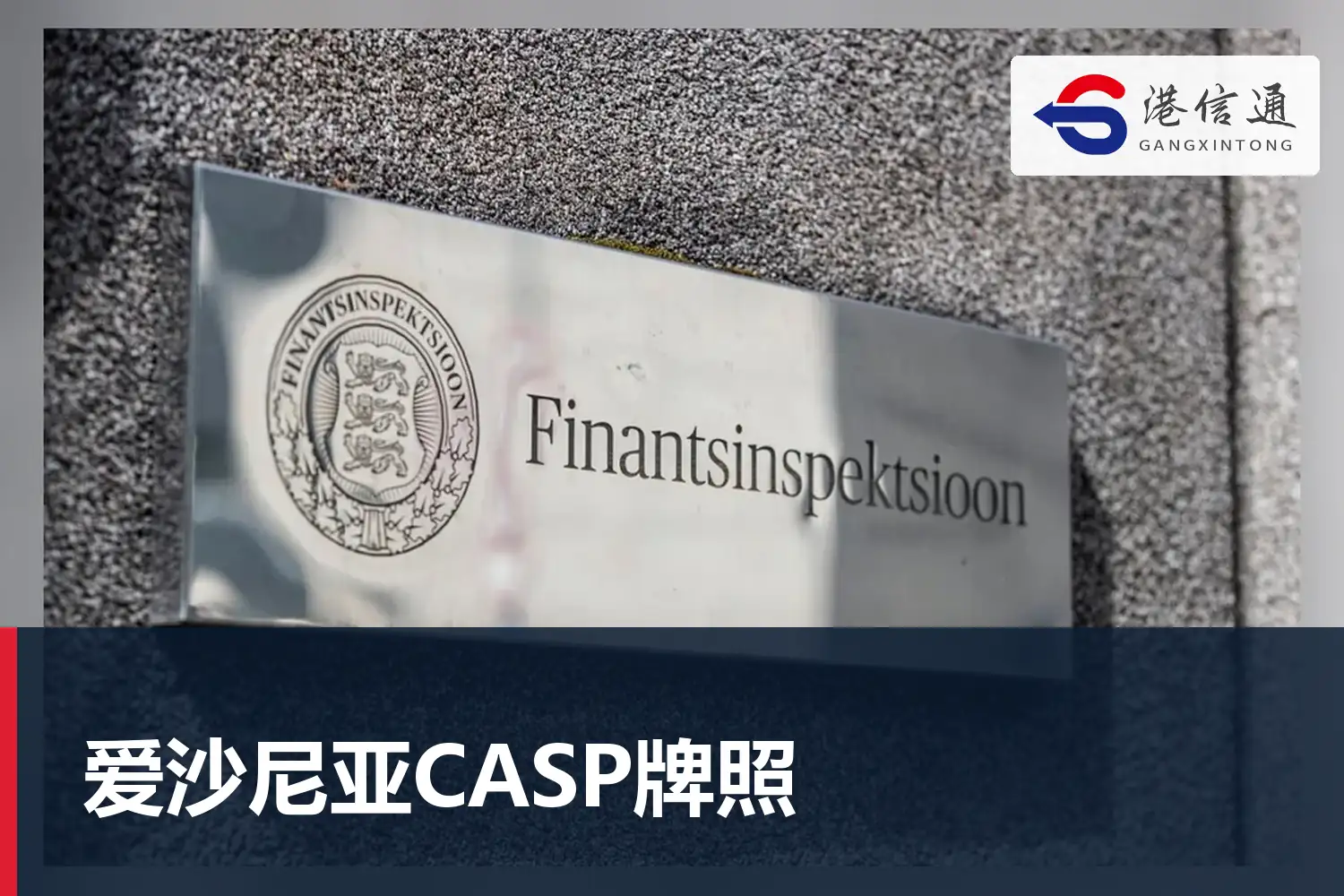
Estonia CASP digital currency license background:With the EU MiCA (Crypto-Asset Markets Act) The regulatory framework will be fully enforced from the end of 2024 to 2026,Estonia’s VASP registration system (which was often called the MTR digital currency license in the past) originally issued by the Financial Intelligence Unit (FIU) has beenCompletely abolished or facing restructuring。at present,All crypto businesses operating in Estonia must report directly toEstonian Financial Supervisory Authority (Finantsinspektsioon, FSA) Apply for a new CASP (Crypto Asset Service Provider) License。
If parallel layout in multiple jurisdictions is required,Can be evaluated simultaneously Lithuania VASP License、Hong Kong VASP License and US MSB Digital Currency Authorization,Build a three-region compliance network of "EU + Asia + North America"。
ssi
Application access conditions (B2B practice)
Management and compliance functions need to be configured that can be verified by regulatory agencies;Only the “nominal structure” pass rate is low,And the risk of subsequent annual inspections is high。
Risk assessment required、Customer due diligence (KYC/KYB)、Suspicious transaction monitoring、Sanctions Screening、Transaction record retention and training mechanism。
The ultimate beneficiary (UBO) link must be penetrable,The source of funds and shareholder background must have verifiable materials。
Product flow needs to be described、capital flow、Technology flow and risk control nodes,Make sure you can report to the bank、Audit and supervision parties unanimously explained。
director、Compliance officers and key management personnel need to meet integrity requirements、Experience and performance requirements,Avoid “nominal executive” arrangements。
Regular reports are still required after being licensed、Internal control update、Review of high-risk customers and responses to regulatory inquiries,Must have budget and team support。
Hong Kong Xintong usually recommends that customers complete a "pre-screening gap assessment (Gap Assessment)" before applying.,Connect application documents with future operational compliance at one time,Reduce the cost of repeated parts replacement and regulatory inquiries。For customers who need to open bank accounts simultaneously,Can be combined Offshore bank account opening and Offshore private banking services Make overall plans。
Application process and expected lead time
Confirm business scenario、target customer area、Transaction path and license compatibility,Export regulatory gap list。
Complete company establishment、equity penetration、Director and compliance position arrangements,and implement localized management requirements。
formulate risk assessment、KYC/KYB、EDD、Transaction monitoring、suspicious report、Sanctions Screening and Internal Audit Process。
Submit a complete set of information in regulatory format,Focus on responding to replacement parts、Interview and explanation of business substance。
Establish a reporting cadence、record retention、Annual review and risk control iteration mechanism,Ensure long-term stable operation。
Fee structure and budget model
The Estonian MiCA cryptoasset market license is currently handled by Finantsinspektsioon。CASP clearly listed on the official page、The asset reference token issuer or electronic money institution application processing fee is 3,000 EUR。
| project | Current official standards | illustrate |
|---|---|---|
| CASP authorization application processing fee | 3,000 EUR | Pay with license application |
| Cross-border service notice | No processing fee | MiCA Cross-Border Notification for Authorized CASPs |
| minimum prudential safeguards | By MiCA service category | Separate from processing fees,No 10,000 The current application fee is written in Euros |
Official basis and last verification date:2026August。Estonian FSA Crypto-Asset Market Authorisation,The official page was last edited on May 27, 2026。
Key points for continued compliance and risk control after obtaining a license
Approval is just the starting point。Regulatory penalties mostly occur after obtaining a license,Common trigger points include:Insufficient customer stratification、Late filing of suspicious transaction report、Cross-border high-risk address screening fails、Beneficiary information updates are delayed、Outsourcing management is not compliant。
It is recommended to establish “three lines of defense”:
- first course:business team executionKYC/KYB andTransaction monitoringrule;
- Second course:Compliance and MLRO conduct independent review and reporting;
- The third course:Internal/external audit performs periodic verification of the effectiveness of the system。
If the company plans to upgrade its financial license later,Can be docked in advance Digital Bank License Application or Singapore MAS payment license governance standards,Avoid repeated modifications。
Licensing verification for CASP business in Estonia
Estonian crypto asset services should no longer be simply understood as an early “virtual currency license”。Should be based on the type of service under MiCA、Client and asset scope judgment CASP authorization and transition arrangements,and check the latest requirements from Estonia’s financial regulator。
- explicit hosting、trade、exchange、transfer、Service boundaries such as trading platforms or advice。
- Prepare management、Equity、risk management、AML/CFT、IT security、Customer assets and complaint handling information。
- Check with local authorities、capital、organize、Report、Marketing and cross-border service requirements。
- Customer retention due diligence、Transaction monitoring、Wallet control、Incident response and third-party outsourcing records。
Official verification:Estonian Financial Supervisory Authority crypto asset license information、European Securities and Markets Authority MiCA crypto asset regulatory information。Do not replace the current authorization conclusion with the old license plate name。
Establish a response mechanism within 72 hours,Make sure the material diameter is consistent、Complete chain of evidence。
by industry、area、Trading behavior dynamically adjusts EDD threshold and review frequency。
Deploy auditable tools and keep alarm handling records,Support regulatory penetration inspection。
Form a quarterly compliance dashboard,Incorporate risk indicators into the closed loop of business decision-making。
Frequently Asked Questions about Estonia CASP Digital Currency License(FAQ)
The Estonian CASP (Crypto Asset Service Provider) license is based on the EU MiCA regulations,License issued by the Estonian Financial Supervisory Authority (FI)。It replaces the old MTR/VASP system,Allow licensed entities to offer crypto asset exchanges within the EU、hosting、trading platform、Investment consulting and other services。Any company established in Estonia or operating crypto business to EU customers,are required to obtain the license in accordance with the law。
CASP license covers a wide range of businesses according to MiCA classification,Mainly include:Crypto assets and fiat currency or currency exchange、Wallet hosting、Token issuance、Cryptoasset investment advice、Order transmission and trading platform operation。Different business categories (Class 1/2/3) correspond to different capital and compliance requirements,Enterprises need to accurately select and declare based on actual business activities。
The registered capital threshold depends on the type of business:Consulting only、It is recommended to wait for Class 1 service which is about 50,000 euros;Class 2 services such as mainstream exchanges and wallet hosting are €125,000;Class 3 such as trading platforms require 150,000 euros。The capital must be paid in full,Deposit with an Estonian or EU qualified financial institution,and continue to maintain it as its own funds,Not to be escaped or used for other purposes。
Absolutely not。FI strictly scrutinizes substantive operations (Substance),Licensed entities must have a real physical office in Estonia (virtual anchor addresses are not available),The actual management center and decision-making core must be located locally。Purely empty shells or remote operations relying only on e-Residency will directly lead to application rejection.。
The board of directors and senior executives must pass the FI’s “Fit and Proper” review,Submit a clean criminal record、Credit certificate and employment history。Core requirements include:At least one Estonian or resident director;Directors must have higher education background and more than 2 years of relevant experience;Each director may serve in a maximum of two licensed institutions,to ensure effective participation in governance。
A dedicated Estonian-based Chief Compliance Officer and Money Laundering Reporting Officer (MLRO) must be employed。This person must be well versed in EU and Estonian anti-money laundering regulations,Able to communicate directly with FI in English or Estonian,And they are not allowed to concurrently hold a large number of positions in shell companies,FI will conduct an interview or assessment of their competency。In principle, one compliance officer can serve at most two licensed institutions.。
Yes,This is a mandatory precondition。Before submitting your license application,The company must successfully open a public account with a compliant bank or electronic money institution (EMI) within the European Economic Area (EEA),and inject the required paid-in capital,As part of the funds compliance certificate。
The current processing fee for applying for CASP authorization from Finantsinspektsioon is 3,000 EUR;The ongoing supervision and professional operation costs after authorization will be calculated separately.。See detailsEstonian Financial Supervisory Authority CASP authorization page。
The typical process is:Set up OÜ Private Limited in Estonia → Lease a physical office and recruit a local compliance team → Open a bank account and fully fund it → Prepare a business plan、AML/KYC Handbook、A full set of compliance documents such as IT security plan → Submit application through FI online portal → Cooperate with multiple rounds of supplementary Q&A、On-site defense→obtained wholesale license。
Under the MiCA prudential regulatory framework,The standard review and Q&A cycle for FI is usually 3 to 9 months,Some complex applications may take more than one year。If derivatives or novel business models are involved,It is recommended to reserve at least 10 months。The actual length of time depends on the quality of the case file、Supervisory load and communication efficiency。
Core submission documents include:Detailed 3-year business and financial forecasts、IT system architecture and anti-penetration testing report、Technical description of money tracking in compliance with EU TFR travel rules、Proven proven sources of wealth for all shareholders and executives、Organization chart、Compliance Policy Manual (AML/CTF/KYC)、and the director’s Fit and Proper statement, etc.。
Enterprises holding old MTR/VASP licenses can continue to operate during the transition period until June 30, 2026,However, a CASP conversion application must be submitted to the FI before this。Those who fail to obtain formal CASP authorization after the expiration date will lose their business qualifications.。New applicants will directly take the MiCA CASP path,MTR/VASP applications will no longer be accepted。
After obtaining the license, investors must continue to perform due diligence、Transaction monitoring、Sanctions Screening、suspicious transaction report、Travel Rules Information Delivery、Annual external financial and cybersecurity audit、Capital adequacy maintained、Employee regular training and other obligations;Major changes must be reported to FI promptly,and undergo on-site inspection。
Estonian tax regime attractive for crypto businesses:Undistributed profits enjoy 0% corporate income tax,Only dividends are taxed at 20% when distributed;Cryptocurrency exchange transactions are exempt from value-added tax (VAT)。However, tax planning needs to comprehensively consider the place of business、Customer location and permanent establishment risk,You can’t avoid tax just by relying on a license plate。
The most common stuck points include:Business description is vague、AML/KYC system is incomplete、Proof of insufficient funds、Director/UBO background material has not been penetrated、Lack of local substantive operations (no real office、(no local personnel)、Missing IT security plan,and failure to respond to regulatory supplementary documents in a timely manner。Anything that makes the company appear to be an "empty shell" can result in approval delays or denials。