

The definition and legal basis of Hong Kong company notarization
Hong Kong company notarization refers to a notary public with specific qualifications in Hong Kong,rightHong Kong company registrationEstablishment documents、Business operating documents、The authenticity of board resolutions or power of attorney, etc.、Legal activities whose legality is proven。Since Hong Kong and the Mainland belong to different legal systems,,When documents generated by a Hong Kong company are used in the Mainland or other countries,Must go through the corresponding notarization and transfer procedures,in order to have legitimate legal effect。
According to the Ministry of Justice's "Several Provisions on the Appointment of Notaries in Hong Kong to Handle Notarized Documents",Hong Kong company documents are sent to the Mainland for use,Must be commissioned by the Ministry of JusticeLegislative Council:China-Appointed Attesting Officer system(China-appointed notary public) issues a notarial certificate,and via Chinalegal services(Hong Kong) Co., Ltd. stamped with forwarding seal,valid。

Common types and applicable scenarios of Hong Kong company notarization
Specially designed for use in mainland China。Applicable to setting up wholly foreign-owned enterprises (WFOE) in the Mainland、Sino-foreign joint venture、Representative office,or litigate in the Mainland、Equity changes、Trademark registration、Scenarios such as real estate transactions。
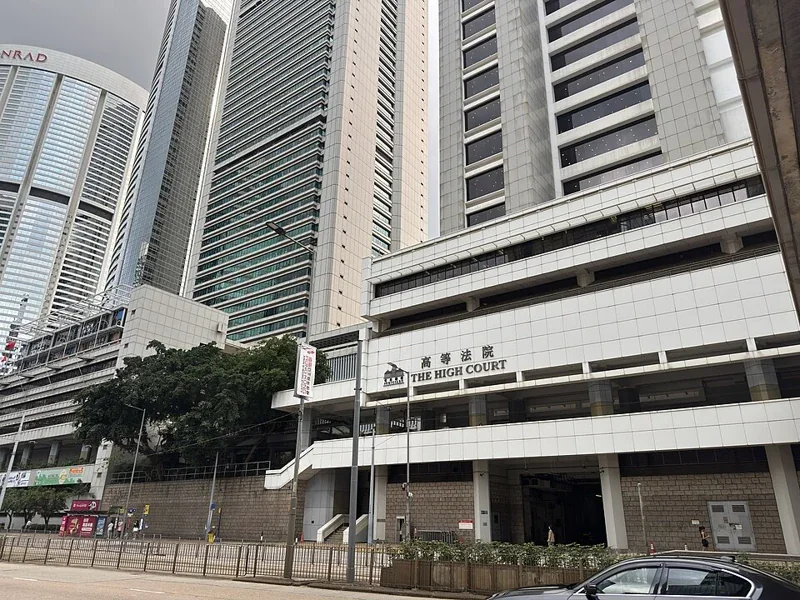
Applicable to Hague Convention member countries (such as the United States、U.K.、Japan、Documents used in Korea, etc.)。Confirmation of the notary’s signature and seal by the Hong Kong High Court,The process is relatively simple。
Applicable to non-Hague Convention member countries (such as Vietnam、Instruments used in the United Arab Emirates, etc.)。It must be notarized by a local notary in Hong Kong first.,Then submit it to the High Court of Hong Kong for endorsement.,Finally, it will be sent to the embassy or consulate of the destination country in Hong Kong or Mainland China for authentication.。
List of required documents for Hong Kong company notarization
Includes Certificate of Incorporation (CI)、Business Registration Certificate (BR)、Annual Return (NAR1) or Incorporation Return (NNC1)、Articles of Association (M&A) and other basic registration documents。
Including Board Resolution、Shareholders meeting resolution、Power of attorney (POA)、Certificate of legal representative, etc.,Need to be customized and drafted according to the requirements of the specific use department。
Valid identification documents of company directors and shareholders (copy of ID card or passport)。If involved in litigation,A complaint is also required、Judicial documents such as statement of defense or legal representative’s identity certificate。

Standardized process for notarization of Hong Kong companies
Hong Kong Xintong compliance experts confirm the specific purpose of the notarized documents with the client、Department of use and destination country,Clarify the type of notarization (entrusted notarization、Apostille or embassy certification) and make a list。
Client provides required company documents and identity proof,Hong Kong Xintong's professional legal team conducts strict pre-review of documents,Ensure that the format and content meet the requirements of the notary office and receiving department。
Draft a statement based on actual use、Authorization letter or board resolution。Director's signature required,Hong Kong Xintong will arrange for directors to sign by video or in person under the witness of a notary.。
The Ministry of Justice, which Hong Kong Information Network cooperates with, appoints a China-appointed notary to officially notarize the documents.,Issue the original and copy of the notarized certificate。
Send the notarial certificate to China Legal Services (Hong Kong) Co., Ltd. for review、Register and stamp with a special stamp for forwarding (this step is only for notarization sent to the mainland)。
After completing all notarization and transfer procedures,Hong Kong Xintong will securely send the original and copy of the notarized certificate to the customer's designated address in the Mainland or overseas.。
Frequently Asked Questions about Hong Kong Company Notarization(FAQ)
cannot be generalized。Obtain specific documents and certification requirements from the receiving agency first;When you need China-appointed notary services,The qualifications of the undertaker and the current procedures should be checked。 SeeLaw Society of Hong Kong:List of China-appointed notaries。
cannot。Material verification、sign、The time affected by the witness and follow-up procedures,Should be scheduled according to specific documents,No commitment to a fixed expedited deadline。 SeeLaw Society of Hong Kong:List of China-appointed notaries。
by the undertaker according to a notarized act、Identity and Authorization and Reception Requirement Determination,There is no guarantee that all directors will be exempted from being present or that all documents can be notarized via video。 SeeLaw Society of Hong Kong:Register of International Notaries。
The requirements of the receiving agency should be determined first,The documents will then be verified by a qualified China-appointed notary and the corresponding review and forwarding procedures will be,The path cannot be automatically replaced with International Notary or Apostille。 SeeLaw Society of Hong Kong:List of China-appointed notaries。
Hong Kong company notarial certificate itself does not have a statutory validity period,However, the mainland’s user departments (such as the Industry and Commerce Bureau、court or bank) will usually require that the notarial deed be signed on 3 months or 6 within months。therefore,It is recommended that customers confirm the usage time before proceeding.,Avoid the need to re-apply due to "expiration" of the notarial certificate。
Basic information includes:Certificate of Incorporation (CI)、Latest Business Registration Certificate (BR)、Latest annual return (NAR1) or return of incorporation (NNC1)、Articles of association and identification documents of directors。According to the specific notarization purpose,Board resolutions may also be required、Authorization letters and other customized documents。
It's a different system。Apostille According to the convention and the place of origin of official documents、Destination applicable relationship processing,China-appointed notarization should be confirmed according to the specific purpose in the mainland,It cannot be presumed that the two are substitutes for each other simply because China has acceded to the Convention.。 SeeHCCH:Apostille Convention and Electronic Additional Certificate。
The old list cannot be used。HCCH Leschat has been 2022 Year、Vietnam in 2026 Year 9 effective month,The place of origin should be checked、Applicability between places of use、Decision will be made after objections and the nature of the documents。 SeeHCCH:Join from all over the world、Effectiveness and objection status。
Notarization fees mainly consist of three parts:1. Notarization fees charged by China-appointed notaries (calculated based on the number of document pages and copies);2. Forwarding fees charged by China Legal Services (Hong Kong) Limited;3. Professional agency and document pre-examination service fees charged by Hong Kong Xintong。Specific fees will be assessed based on the number and type of documents you need notarized。
Can。For example,If the mainland bank only requires the latest notarized business registration certificate,We can only handle single notarization for the business registration certificate。But if it is used to establish a foreign-invested enterprise,The industrial and commercial departments usually require a complete set of subject qualification certification documents (CI、BR、NAR1、Articles of Association) for packaging and notarization。
We will help organize the data according to the purpose of the document、Check basic formats and engage with eligible service providers。The issuance and receipt of notarized documents shall be issued by the notary public、Lawyers and receiving institutions make independent decisions in accordance with applicable rules,Please confirm the latest document list before processing。
The Law Society of Hong Kong publishes the list of international notaries,Can check the undertaker and practice organization。 SeeLaw Society of Hong Kong:Register of International Notaries。
The Lawyers Association also has a list of China-appointed notaries.,Must confirm that they are still practicing in a law firm and are qualified to provide this service。 SeeLaw Society of Hong Kong:List of China-appointed notaries。
Belongs to the officially listed categories of admissible documents,However, it must be accompanied by the required recent printed copy of the book search and other information.,Whether other notarization is required depends on the actual document。 SeeHong Kong Judiciary:Apostille accepts documents、Fees and Procedures。
The Hong Kong judiciary requires that the relevant company certificates be accompanied by a printed copy of the relevant searches made within three working days.。 SeeHong Kong Judiciary:Apostille accepts documents、Fees and Procedures。
per application 125 Hong Kong dollar,notarization、Translation and professional services fees are additional,It cannot be called the total price of notarization of the entire company.。 SeeHong Kong Judiciary:Apostille accepts documents、Fees and Procedures。
Can't infer this。Apostille does not replace a search、Due diligence and content verification,Basic supporting documents should match the requirements of the receiving agency。 SeeHCCH:Apostille Convention and Electronic Additional Certificate。
An electronic Apostille issued by a qualified competent authority is equally valid as a paper copy,Scanning ordinary documents does not equal official electronic certification。 SeeHCCH:Apostille Convention and Electronic Additional Certificate。
Officially now available for participating international notaries to submit documents for digital signature,It should be handled by a qualified person in accordance with the procedures。 SeeHong Kong Judiciary:Apostille accepts documents、Fees and Procedures。
not guaranteed。Document authentication is different from substantive review by a bank or registration authority,must still satisfy its business、Identity and other requirements。 SeeHCCH:Apostille Convention and Electronic Additional Certificate。