Singapore company registrationInvolves capital setting、Director and secretary configuration、Registered address、Bank account opening、annual return、Tax compliance and subsequent changes and other aspects。Hong Kong Xintong takes a professional compliance perspective,Collate the most common practical issues faced by companies when registering and operating Singapore companies,Help investors judge handling conditions more clearly、Compliance obligations and ongoing maintenance costs。
one、Singapore company capital setting and shareholder responsibilities
What does issued capital represent?
issued capitalAlso called licensed capital or authorized capital,Mainly represents the company’s highest fund-raising ability。A company can raise funds by issuing shares to shareholders or investors,The higher the issued capital,The greater the amount of funds a company can theoretically raise。Except for the issuance of shares,The company can also obtain funds through advances from directors or borrowing from banks;Bank loans often require assets to be pledged or directors to provide personal guarantees。
Issued capital can also be viewed as the degree of shareholder commitment to the company。Generally speaking,The greater the issued capital,Third parties’ confidence in the company will also increase accordingly。
What is paid-up capital?
Paid-up capital is also called paid-in capital or paid-in capital,Mainly reflect investors,That is, the investment money actually paid by shareholders to the company,Shares issued are usually calculated in units of 1 yuan per share.。
How much should the issued capital be set at?
Issued capital represents the company’s ability to raise funds,The specific amount should be determined based on the scale of funds that shareholders plan to invest in the company and its business needs.。
Does paid-up capital have to be actually in place?
The paid-up capital does not have to be actually deposited into the company's bank account.;However, the debt liability corresponding to the unpaid portion is usually borne by the shareholders.。at the same time,If the company needs to apply for a permit,Relevant funds usually need to be physically available。
What is the difference between issued capital and paid-up capital?
In principle,Paid-up capital should match issued capital。If there is an unpaid portion,May be treated as director's loan。
Can a Singapore company increase its issued capital after its establishment?
Can。The company can increase issued capital according to actual development needs,However, a general meeting of shareholders must be convened and a resolution to increase the issued capital must be passed.,resolution、The specified format form and corresponding fees must be submitted to the relevant Singapore government departments for processing.。
two、Singapore company registration conditions and basic configuration
Can foreigners register a Singapore company?
Can。Foreigners can register a company in Singapore with their ID card or passport.。Singapore companies have no special restrictions on the nationality of shareholders and directors。in fact,Most offshore company registration places also do not impose restrictions on the nationality of shareholders and directors.。
How to confirm whether a Singapore company is legally registered?
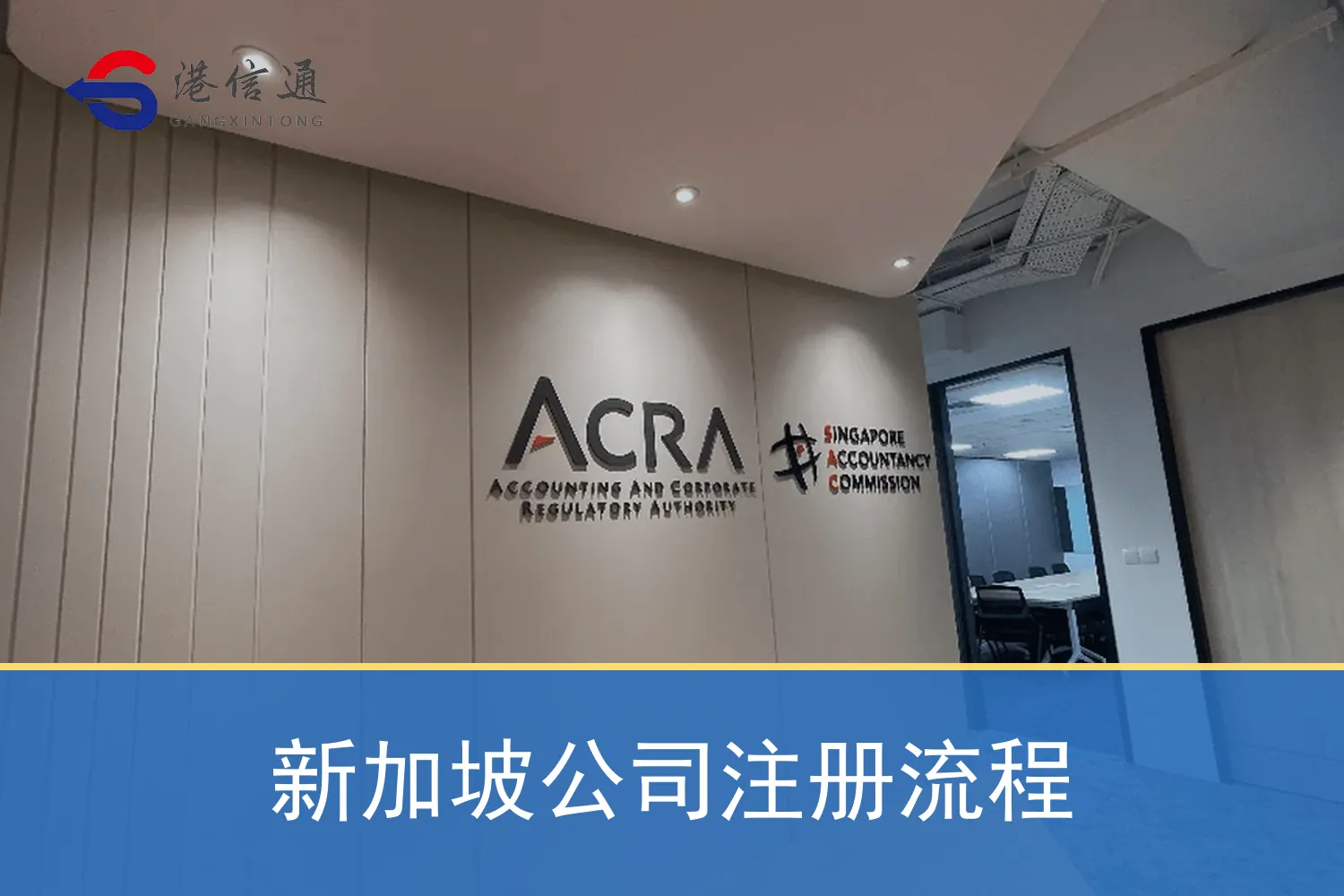
Inquiries can be made through the Singapore Registration Office,To verify company registration status and related registration information。
What are the requirements for setting up a Singapore limited company?
registerSingapore Limited CompanyUsually the following conditions need to be met:
- One or more shareholders and directors who are over 18 years old;
- a singapore citizen、Singapore residents or EP holders serve as directors of the Singapore party;
- A registered address in Singapore;
- A Singapore resident acting as legal secretary of the company。
What services are usually included in registering a company in Singapore?
Individual limited company registration services usually include:
- Draft articles of association,and provides corporate suite,Include company seal、stock、Articles of Association and Minutes of Meetings;
- Submit registration documents,and provide certified copies of documents;
- Provide the company's legal registered address,Appointment of new director and legal secretary。
What if there are no new directors?
Hong Kong Xintong can assist in arranging qualified new directors.。This service usually requires an additional fee。
How do new directors protect the company's interests?
Singapore government regulations,When a foreigner registers a company, a person with Singaporean identity must serve as a director of the company.。New directors do not own shares in the company,and will sign an agreement with the customer,Not involved in the daily operations of the company,No authority to handle corporate bank accounts。
three、Singapore company registration process、Name and business scope
What is the company registration process in Singapore? How long will it take?
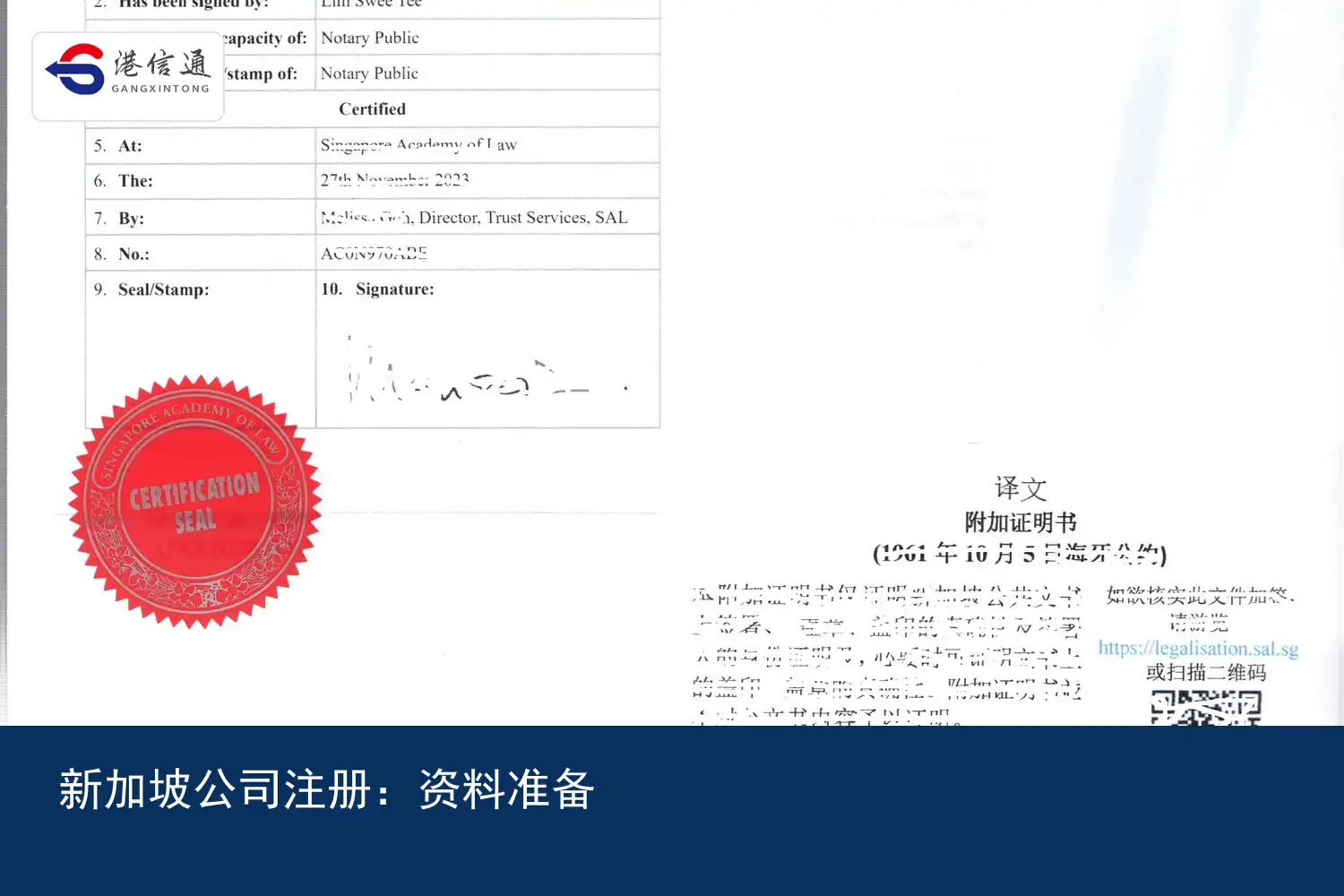
Singapore company registration processUsually includes a name check、Sign a contract、Prepare legal documents、Client signs document、Return documents and formal registration。After receiving signed documents,Registration usually takes 1 to 2 working days to complete。The complete set of company registration documents can be delivered in approximately one week,The specific time will be affected by the express delivery time in different regions.。
Can a Singaporean company invest and set up a business in China after it has just been established?
Once the company is established, it can invest in China,Handling foreign joint ventures or wholly foreign-owned enterprises。
Can a Singapore company set up an office in China after its establishment?
Regulations across China's provinces and cities are not entirely consistent,Need to judge based on local policies。Currently, some regions require that Singapore companies must be established for at least 2 years after,to set up an office。
How to determine the name of a Singapore company?
When registering a company in Singapore,The company name must be in English,The name suffix is PTE LTD。If the company name contains the country name,or involving finance、bank、Names of sensitive industries such as transportation,Review times are usually longer,Up to 60 days。The company name can be registered in advance,Name reservation is valid for 60 days。
What are the requirements for a registered address?
Singapore companies must have a local address in Singapore as the company's registered address。The registered address can be shared by multiple companies,It can also be provided with the assistance of Hong Kong Information Communications。
What is a company legal secretary?
Singapore company law,The company must have a legal secretary,即Company Secretary。The legal secretary must be a Singapore Citizen or Singapore Permanent Resident (PR),HKIT can assist in assigning the statutory duties。
How to determine the business scope of a Singapore company?
In principle, the business scope of Singapore companies is less restrictive。under legal premise,The company can operate a variety of businesses,For example, finance、healthcare、Shipping、Import and export trade、real estate、architecture、decoration decoration、information network、Clothing and Textile、travel、Cultural publishing, etc.。Some business types that are difficult to register in other countries,Registration is also possible in Singapore。Singapore companies can fill in up to two business scopes。
Four、annual report annual review、Accounting, auditing and compliance maintenance
What is annual report review?
Singapore companies file tax returns once a year,No monthly tax filing required,There is no need to submit accounting accounts every month。A new company needs to hold an annual general meeting (AGM) within 18 months after registration.,Prepare annual accounts and financial reports and submit them to the Registration Authority (ACRA),Report taxes to the tax bureau at the same time (TR)。These matters are usually collectively referred to as the annual review of the annual report.。
When does the company need to prepare accounts and file taxes?
Within 18 months after the establishment of the new company,or an existing company within the financial year,Need to do accounting and tax filing。Prepare accounts and file taxes once a year。Accounting usually requires submission of monthly bank statements and relevant vouchers or documents for each business transaction。Hong Kong Information Communications will remind customers one month in advance to prepare relevant information。
How are accounting and auditing regulated?
All Singapore companies that do business must keep accounts。Companies can do their own accounting,You can also entrust a professional accountant to handle it。The audit must be completed by a certified public accountant or auditor。Companies with turnover less than S$5 million do not need to be audited。
Annual company accounting accounts、How to handle audit and tax filing?
Hong Kong Xintong can assist with accounting、Audit and tax reporting matters。Customers only need to provide relevant information,Fees will be determined based on actual workload,And start work after both parties confirm the fee amount,We will not make accounts in advance without the customer’s consent.。
What expenses will be incurred in the second year?
Singapore companies usually incur two types of expenses in the second year:
- If you continue to use the registered address、Legal secretary and new party director services,Hosting fees will be incurred;
- After the first anniversary of the company's establishment,Accounting and tax filing fees will be incurred。
If the annual turnover exceeds S$5 million,Or a Singaporean company has invested in China,Audit fees will also be incurred。After the second year,The Singapore government does not charge any licensing or business registration fees。
What are the consequences of not filing an annual report on time?
Failure to submit the annual report after the due date will result in a fine,The longer the delay,The higher the fine。
What are the consequences of not filing taxes on time?
Failure to file tax returns by the due date will incur penalties.,The longer the delay,The higher the fine。
If you need to close the company after registering the company,What should be done?
Before closing the company, the company's accounts should be sorted out according to government regulations.,Close all bank accounts,Submit the company closing application again。The entire process takes approximately 6 months。
five、Bank account opening、Offshore accounts and account documents
What are the restrictions on opening a bank account? Is there a basic account?
A bank account must be applied for after the company is established.。Account opening generally requires directors to visit the bank in person.。A company can open multiple bank accounts,There is no such thing as a “basic account”。
Accounts can be set up in multiple currencies,For example, US dollars、Shingen、EUR、RMB, etc.。Singapore is currently the only country overseas where you can open a RMB account.。
Can I open a Singapore local account without going to Singapore?
Can。Hong Kong Telecom and Singapore United Overseas Bank、HSBC Singapore and Standard Chartered Bank cooperate,Customers can complete signature authentication at any branch of the above-mentioned banks in China.,To open a Singapore local account,It takes about three weeks。
Can a Singapore company open an offshore account in Hong Kong or Mainland China?
Can。Enterprises can submit account opening information according to bank requirements,Apply to open relevant accounts。
What documents are usually required to open a corporate bank account in Singapore?
Singapore company opens account in Singapore bank,Generally the following documents are required:
- Articles of Association M&A;
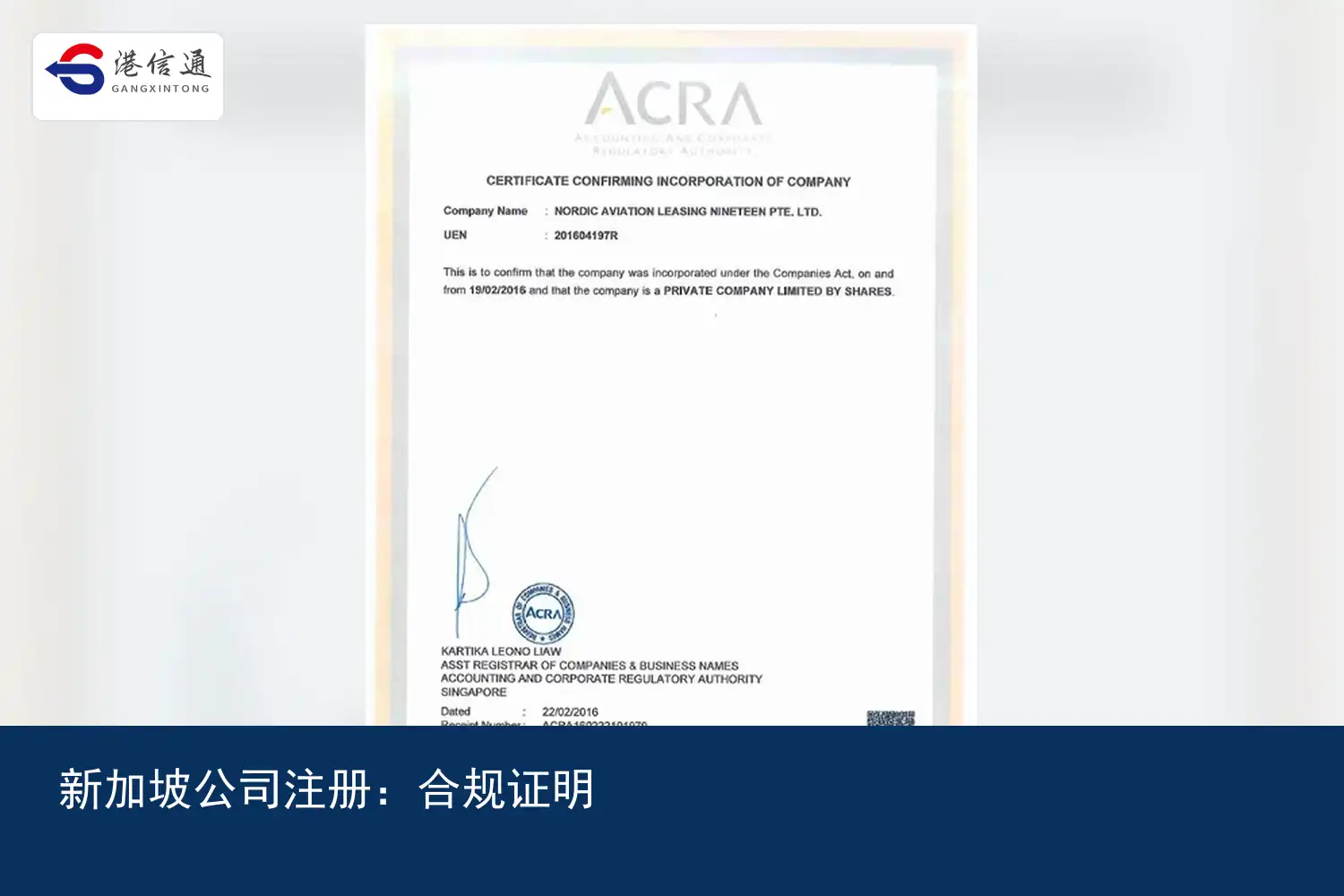
- Company Registration Certificate CERT;
- Company search information BIZFILE;
- Bank introduction letter,If any;
- Copies of ID cards or passports of directors and designated signatories of accounts。
How are offshore accounts defined?
Bank accounts opened in countries or regions outside Singapore,Usually an offshore account。
What counts as offshore business? Do offshore business income need to be taxed?
Businesses occurring in countries or regions outside Singapore can be regarded as offshore business。Offshore business such as transferring money in and out through offshore accounts,And profits will not be repatriated to Singapore,Generally, there is no need to pay Singapore tax。
six、Singapore tax system、Tax filing time and consumption tax
What is the tax situation for companies in Singapore?
Singapore has fewer taxes、Free trade countries with lower tax rates。The main tax that companies must pay every year is profits tax,i.e. income tax,Usually calculated as a percentage of the company’s net profit。
The first 3 years since the company was established,Net profits below S$100,000 are tax-free;Net profit ranges from S$100,000 to S$300,000,The tax rate is 5%;Net profit above S$300,000,The tax rate is 17%。
How is the specific tax filing and tax payment time defined for Singapore companies?
The main reporting times include:
- personal income tax:File personal income tax for the previous year before April 15th each year,Pay within one month after receiving the tax payment notice;
- Corporate Income Tax ECI Estimated Tax:The declaration must be made within three months after the company’s financial year-end date。After declaration,The Inland Revenue Authority of Singapore (IRAS) will issue a tax payment notice based on the tax assessment form.,Notice is usually received 1 to 2 months after the tax assessment due date,Pay relevant taxes within 1 month after receiving the notice;
- Form C tax form:The deadline is December 31st each year。The company's financial year-end date is on or before December 31 of the current year,The year of assessment (YA) is the following year。For example, Form C of YA2012 is usually issued around April every year.,Used to file taxes for the previous year;If there is any discrepancy between the amount declared by ECI and,More refunds and less compensation can be made。The application deadline is November 30, 2012,The tax bureau will issue a tax payment notice after receiving Form C.,The company needs to pay taxes within one month;
- consumption tax:Usually reported quarterly,Complete the declaration within one month after the end of the quarter。Taxpayers may also apply to the tax authorities for monthly or six-monthly declarations.;Either monthly or every six months,The time for declaration and payment is within one month after the end of the relevant period.。
When is the specific time for Singapore companies to pay taxes?
After completing annual tax assessment (ECI),The Government Inland Revenue Department will issue a tax payment notice based on the tax assessment table。Notice is usually received 1 to 2 months after the tax assessment due date,Relevant taxes need to be paid within 2 months after receiving the notice。
Which department produces invoices and receipts for Singapore companies?
The invoices and receipts of Singapore companies are not uniformly printed by the tax bureau.,Instead, it is printed by the company's board of directors according to the nature of the company's business.。bill、Receipts and other documents only need to be stamped with the company seal,It is valid after it is signed by the person in charge.。
What does Singapore’s tax system mainly include?
Singapore taxes are mainly divided into two categories: personal income tax and corporate income tax.。Personal income tax is calculated at progressive rates based on salary income。The corporate income tax rate ranges from 0 to 17% of the company’s net profit。The company's net profit refers to the profit earned by the company during its operations and operations.。
Many domestic customers have Singapore companies that do not actually operate in Singapore.,For example, not leasing an office or hiring staff,Therefore, there is usually no Singapore corporate income tax payable。It should be noted that,Have fund transactions in a local bank account in Singapore,and have a registered address in Singapore,It is not equivalent to “having business and operations in Singapore”。
What does corporate and personal tax filing mainly include?
Corporate and personal tax Annual corporate and personal tax reports are usually submitted to the government tax bureau by professional tax representatives,Mainly include:
- Corporate and personal income tax filing PTR;
- Corporate Income Tax Estimates Submitted to ECI;
- Corporate Income Tax Return TR (Form C);
- Corporate and personal income tax calculations;
- Consumption tax application and tax reporting。
What is Singapore Goods and Services Tax?
Singapore Goods and Services Tax,Goods and Services Tax,It is a tax levied on imported goods and goods and services provided in Singapore.,Equivalent to value-added tax in some countries,The tax burden is borne by the final consumer。
Taxpayers engaged in the provision of goods and labor services with an annual turnover of more than S$1 million,Must register for consumption tax。Taxpayers who have registered for consumption tax,The amount of consumption tax payable is the difference between the output tax minus the input tax paid for the purchase of goods or services.。
Since July 1, 2007,Singapore’s consumption tax rate is 7%。Sales and letting of residential property,and most financial services are exempt from consumption tax;The consumption tax rate for exported goods and services is zero。
seven、Business advantages of registering a company in Singapore
What are the benefits of registering a company in Singapore?
Registering a company in Singapore can help companies enhance their international image、Optimize tax structure,and expand cross-border business layout,Key advantages include:
- Build an international brand,Improve corporate international visibility and competitive advantage;
- Enjoy Singapore’s low tax rates,That is 0% to 17%,And can realize international tax planning under the premise of compliance,Suitable for offshore business operations;
- Promote asset internationalization、Enterprise internationalization and value enhancement;
- Promote enterprise business transformation,Shift domestic trade to foreign trade,Upgrading the processing of future materials to the integration of production, export and trade,to gain more tariff benefits;
- Easier access to international capital support opportunities,Financing and investment are more convenient;
- Strive for immigration and settlement opportunities for entrepreneurs,Promote the appreciation of personal and family assets。
eight、Company change、Secretarial services and follow-up support
How to change company registration information? How long will it take?
Customers only need to inform the registration information that needs to be changed,Hong Kong Information Communications will prepare change documents for customers to sign according to specific requirements.,The processing time is usually 2 working days。
no passport、Don’t want to apply for a passport,Can I register a company in Singapore?
Can。Customers can use their Chinese ID number to register。
What are the legal secretarial services?
Legal secretarial services often include:
- Save and manage company legal registration documents,and continue to update records;
- Managing shareholder resolutions、meeting minutes、Charter、stock、Director and shareholder registration documents and other information;
- Follow up on various time limit requirements of ACRA and IRAS,And notify and prepare documents one month in advance;
- Provide bank account opening or closing services,Including preparation of relevant documents;
- Preparation and issuance of share certificates,Draft company directors’ resolutions;
- Draft notice and agenda for annual or special general meetings;
- Handle share transfer、Change of shareholders、Change of directors、Secretarial Records、Company Name、Change of registered address、Increase or decrease capital、Bank signature changes and other matters;
- Submission of statutory reports to the Registrar、Forms and documents;
- Convene and attend board of directors and shareholders meetings;
- Prepare board and shareholder meeting minutes and resolutions;
- Advise and remind clients of the last date for the company’s annual general meeting。
What does business secretarial services include?
Business secretarial services may include answering phone calls、Send and receive faxes、Daily administrative support such as handling correspondence,It can also be extended to the following matters:
- Mail delivery and forwarding services;
- Fax forwarding service;
- Internet phone services and telephone bill payment, etc.;
- SMS reminder service;
- Visiting customer reception;
- visa、Pass application;
- Handle other matters,For example, book a hotel、air tickets、Airport pick up etc.。
If the company still has a Singapore company registration、Bank account opening、Issues regarding annual tax returns or subsequent changes,Hong Kong Xintong can provide further consultation and compliance support。
About Hong Kong Xintong
GXT-HKComposed of professional teams from mainland China and Hong Kong,Focus on providing global company registration、Financial license application、Bank account opening、One-stop cross-border services such as tax financial planning and compliance consulting,Core covers Hong Kong MSO license、Hong Kong Insurance Brokers and Hong Kong Money Lenders Licenses、US MSB license、Hong Kong 149 license、9license plate,Helping enterprises to go overseas efficiently and compliantly,Steady global layout。